
The focus was not only on creating a plan, but on running it reliably in day-to-day operations. The target schedule could be frozen and released in stages. Binding changes had to be documented with clear reasons. In the actual schedule, real-life deviations such as sick leave, shift swaps, corrected planned times and other changes could be tracked transparently. Additional functions such as searching for available staff, schedule overviews, balance corrections and payroll checks supported operational work.
Real-World Example
Workforce scheduling and route planning combined in one software solution
Demand could be created either manually through daily shift templates or automatically from service routes. Based on this, the system first generated a qualification-based demand plan and then a person-based target schedule. Qualifications, contractual hours, known absences, preferences, recurring schedules, working-time regulations and internal rules were all taken into account. Open shifts could be distributed automatically and then refined manually where needed.
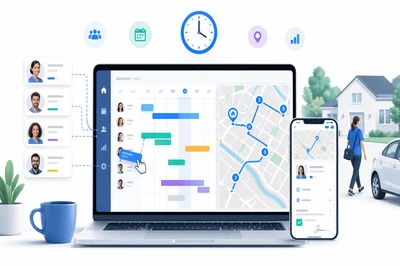
For mobile field organizations, routes, travel times and additional time adjustments were also included in the logic. The solution combined workforce scheduling with route planning, permissions, administration, interfaces and payroll handover. Import/export functions and safeguarded processing of schedule changes were part of the overall system as well.
Benefits for operations
- more reliable planning
- faster response to absences and staffing gaps
- better use of available resources
- greater transparency across planned vs. actual schedules and changes
- stronger compliance with working-time rules
- cleaner handover to payroll and downstream processes
Digitize similar workflows in your own company?
This example shows how custom software can reduce effort in existing workflows. If manual work, media breaks or unclear processes cost time in your company, a tailored software solution can help.
FAQ
Frequently asked questions about staff scheduling and route planning
The most important points about digital duty planning, staff scheduling, routes, qualifications, absences, planned/actual comparison and payroll preparation.
Which planning tasks can be supported digitally?
Digital staff scheduling can help bring together staffing needs, types of duties, qualifications, availability, absences and operational requirements in a clear way. From this, demand plans, planned duty rosters and traceable planning bases can be created and further adjusted in daily use.
Can qualifications, working hours and absences be taken into account?
Yes. Qualifications, agreed working hours, known absences, preferences, reference duties as well as operational and working-time requirements can be included in the planning. This makes it clearer which people are suitable for certain duties or assignments and where open planning needs still exist.
Can open duties be assigned automatically?
Yes. Open duties can be prepared or assigned automatically based on rules and then manually reviewed, completed or corrected. What matters is that automatic planning does not replace control, but usefully supports manual work.
How are changes in the duty roster documented traceably?
A planned duty roster can be recorded as a binding planning basis and later adjusted in a controlled way. Changes such as sick leave, duty swaps, corrections to planned times or other deviations can be documented with reasons and recorded traceably in the actual duty roster.
Can route planning be connected with staff scheduling?
Yes. For mobile field organizations, routes, travel times, additional times and assignment information can be included in the planning. This makes it easier to coordinate staff scheduling and route planning instead of handling both areas separately.
Can data be transferred to payroll or other systems?
Yes. A suitable solution can support interfaces, import and export functions as well as the transfer of relevant data to payroll or downstream processes. This reduces manual intermediate steps and prepares payroll, checks and reporting in a more traceable way.